FOB VS CIF, Which Incoterm Is Better for Your Business
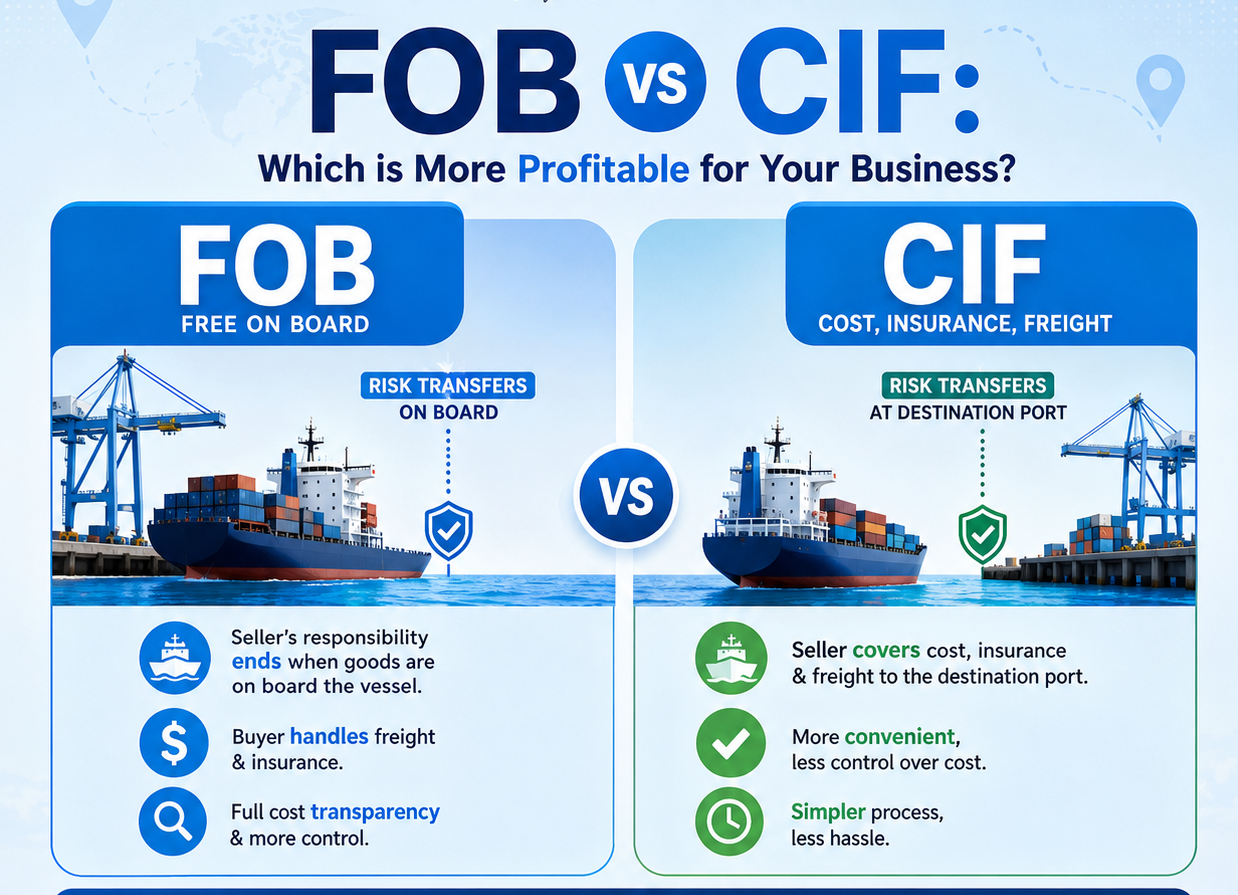
Choosing the right Incoterm can make a big difference in your international shipping costs, risk, and control. Two of the most commonly used sea freight terms are FOB (Free on Board) and CIF (Cost, Insurance and Freight).
So, which one is better for your business?
FOB – More Control, More Transparency
With FOB, the seller delivers the goods on board the vessel at the agreed port of shipment. Once the goods are on board, the risk transfers to the buyer. The buyer then arranges and pays for the main international freight and insurance.
FOB is ideal if you:
- Want full control over shipping costs
- Have a trusted freight forwarder
- Want to choose your own carrier and insurance
- Need greater cost transparency
CIF – More Convenient
With CIF, the seller arranges and pays for the cost, insurance, and freight to the named destination port. However, under Incoterms® 2020, the risk transfers to the buyer when the goods are loaded on board the vessel.
CIF is ideal if you:
- Prefer a simpler shipping arrangement
- Want the seller to organize ocean freight
- Prefer insurance to be arranged by the seller
- Have less need to control the international freight booking
| FOB | CIF |
| Buyer pays main freight | Seller pays main freight |
| Buyer arranges insurance | Seller arranges insurance |
| More cost control | More convenience |
| Greater flexibility | Simpler arrangement |
| Ideal for experienced importers | Ideal for buyers seeking convenience |
Which One Should You Choose?
Choose FOB if your priority is transparency, flexibility, and control over shipping costs.
Choose CIF if convenience and a simpler purchasing arrangement are more important.
The best Incoterm depends on your cargo, supplier, destination, and shipping strategy. Incoterms® are designed to clearly define the responsibilities, costs, and risks between buyers and sellers.
Ship Smarter with Naval Cargo
Need help choosing the right shipping solution for your international cargo?
Let Naval Cargo help you move your cargo safely, efficiently, and with greater cost control.